
Your refrigeration unit runs day and night. Condensation pools at the base of the door. Your utility bills crept up over the last quarter, and you cannot point to a single obvious cause. Before you call a compressor technician, check the gasket: specifically, check how much compression it still has.
Refrigerator gasket compression refers to how firmly the gasket presses against the door frame when the door is closed to create the critical thermal barrier between your cold cabinet and the ambient air in your kitchen. When compression drops, the seal quits. Warm air sneaks in around the clock, even if the gasket looks brand new from the outside. That is the trap most operators miss: a gasket can be uncracked, unwarped, and visually perfect, and still fail to seal.
The fallout is direct: your compressor works double time, utility bills spike, and health inspectors start writing up violations. Gasket compression is the backbone of refrigeration efficiency, but it is entirely ignored until the damage is done.
Refrigerator Gasket Compression: The Science of the Seal
In standard commercial coolers, the door seal relies on a vinyl gasket attached to the door, lined with a magnet that holds the door closed and presses the gasket against the steel extension of the cabinet’s external shell. Some higher-end systems go further, incorporating opposing magnets on the cabinet side to increase the overall door sealing force, which improves contact pressure across the gasket’s full perimeter.
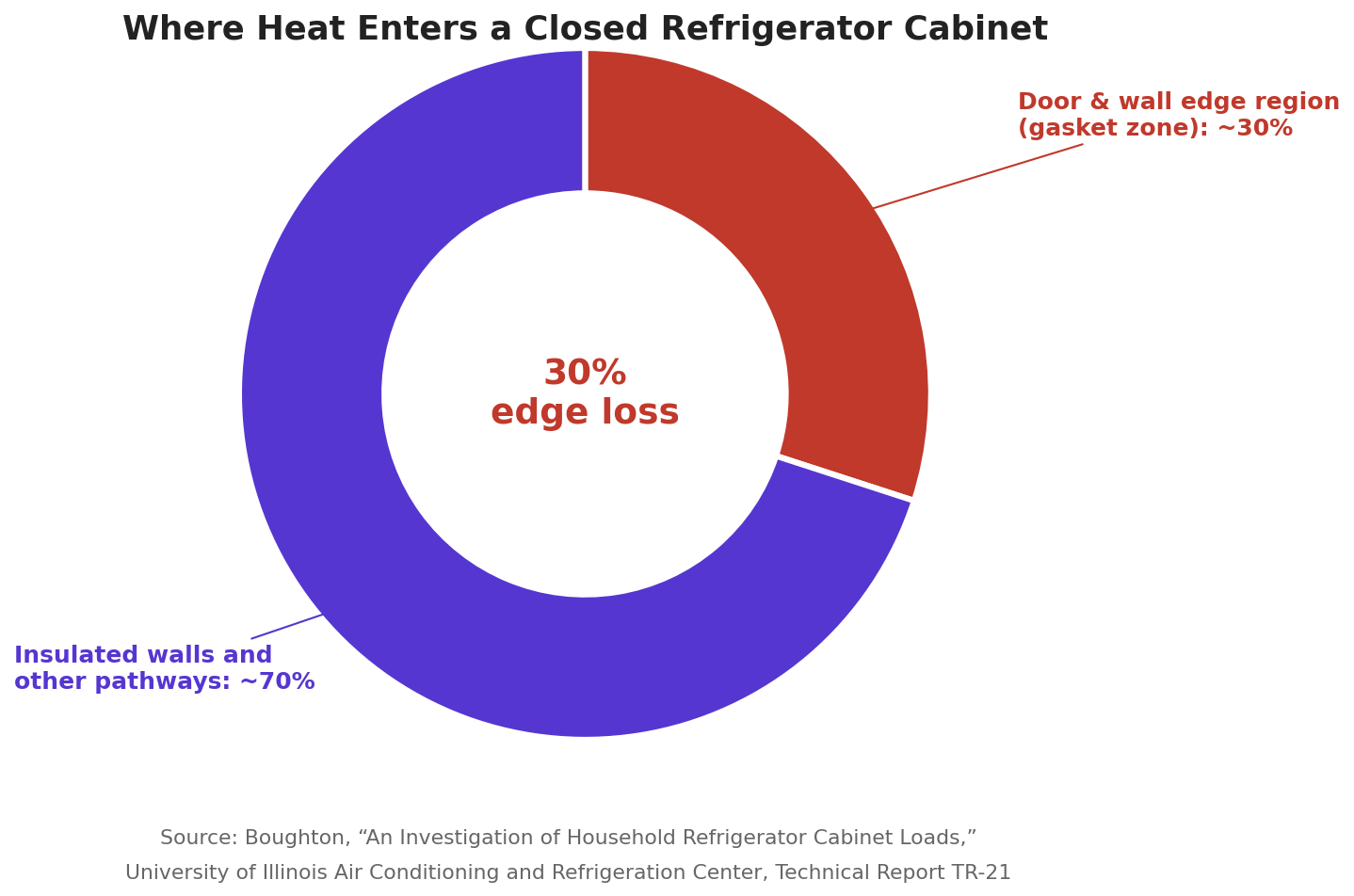
Here is the raw math on why contact pressure matters: heat does not just seep through the insulated walls. It pours in through the edges. According to research from the University of Illinois Air Conditioning and Refrigeration Center, the complete edge loss around a refrigerator door accounts for approximately 30 percent of the overall cabinet heat load. That is nearly a third of all heat gain concentrated in the one area most vulnerable to gasket breakdown.
For a busy kitchen running multiple units, that heat leak is like leaving cash on the table. That is pure waste. Setting up tight commercial kitchen maintenance habits through our refrigeration gasket maintenance program catches these silent profit-killers before they get out of hand.
Why Refrigerator Gaskets Lose Compression Over Time
Gaskets wear out because of compression set, which is the gradual, permanent flattening of the vinyl under constant mechanical slamming. Every time a kitchen line cook slams a door, the gasket squishes and rebounds. Do that hundreds of times a day, and the vinyl loses its bounce. Eventually, it stops pushing back against the frame, leaving a microscopic gap.
We hear it all the time: “My gasket looks fine, so it must be sealing.” That is a flat-out mistake. A gasket can look clean, uncracked, and perfect to the eye while having zero sealing force left. Learning the signs your cooler gasket is failing requires testing, not guessing.
Kitchen settings speed up this breakdown. In places with heavy humidity or rough seasonal swings, with Pittsburgh being a clear example, metal door frames expand and contract constantly. This movement grinds against the gasket, wearing down cheap materials in a hurry.
- Constant Mechanical Stress: Slamming doors hundreds of times a day kills the magnetic pull and flattens the vinyl.
- Heat and Grease Exposure: Kitchen grease rots vinyl at the molecular level, making it stiff and brittle.
- Hinge Wear and Misalignment: Sagging hinges drag the gasket sideways instead of pressing it flat, ruining the contact.
- Cleaning Chemical Damage: Harsh, non-approved cleaners strip the plasticizers right out of the vinyl, turning a flexible seal into hard plastic.
Is your kitchen bleeding cold air and burning cash? Do not wait for a surprise health inspection or a dead compressor. Call Gaskets Rock at (800) 790-9284 Monday through Friday from 8:00 AM to 6:00 PM to talk to our crew, or grab a free commercial gasket quote online today.
How to Pinpoint and Test Your Refrigerator Door Seal
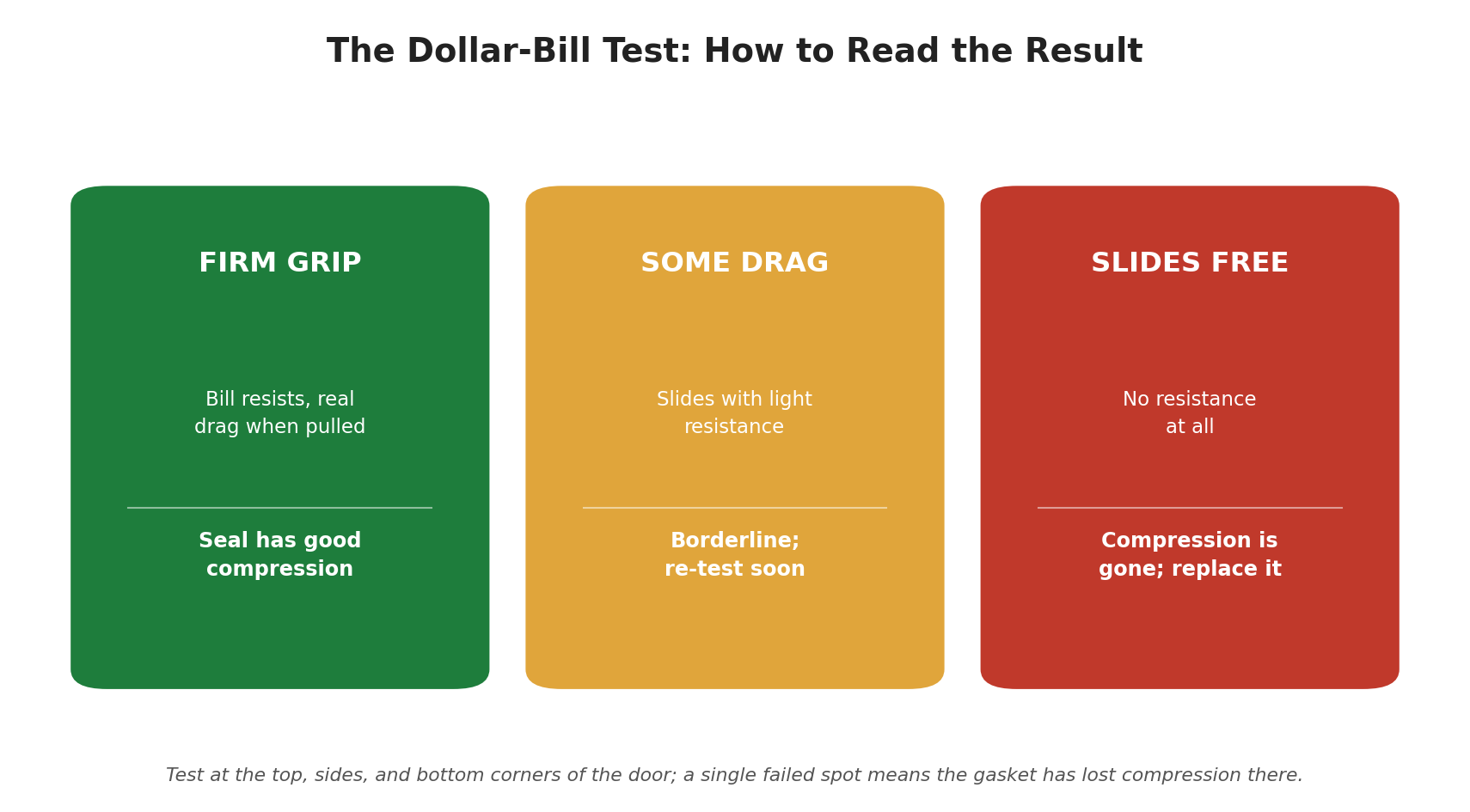
The easiest test in the book costs nothing and takes ten seconds. Shut the door on a dollar bill or any piece of paper of similar thickness so that the bill is clamped firmly between the magnetic vinyl gasket and the metal door frame. Then pull the bill out. If the gasket has solid compression, it will grip that bill tightly. You should feel real friction when you pull. If the bill slides out like it is greased, your gasket has quit.
What Refrigerator Gasket Compression Feels Like in the Dollar-Bill Test
The U.S. Department of Energy’s refrigerator and freezer rating tool rates gaskets as “good,” “fair,” or “poor.” But watch out: a “fair” rating is a trap. It means the gasket looks okay to the eye, but the dollar-bill test proves the actual sealing force is gone.
Test your lines monthly. Putting a firm refrigerator gasket inspection schedule on your calendar stops minor wear from turning into a blown compressor or a failed health inspection.
When compression fails, your compressor runs overtime to keep up. That extra workload burns out the motor and drives up your power bills. While standard coolers handle lower thermal loads, combination units with freezer compartments take an even harder hit. A bad seal on those units is a financial disaster.
Building a great gasket is a balancing act. You need a tight seal, but you cannot make the door impossible to open. Federal safety rules limit how much magnetic force you can use. You cannot just slap on a giant magnet to cover up a bad fit. The seal has to come from perfect geometry and high-grade materials.
- Spiked Utility Bills: A leaking seal forces the compressor to run around the clock, sending your power bills through the roof.
- Food Safety Risks: Warm spots inside the cabinet let bacteria grow, putting you one inspection away from a shutdown.
- Compressor Burnout: Replacing a compressor costs thousands of dollars. Replacing a gasket is a minor expense that stops the damage before it starts.
- Ice and Frost Buildup: Wet kitchen air leaks in and freezes on your evaporator coils, choking off your refrigeration efficiency.
“We are an EXTREMELY high-volume restaurant… our gaskets used to wear out every 2 months! With Gaskets Rock, our commercial refrigeration gaskets last much longer and in many cases over a year! The Gaskets Rock staff do just that, ROCK!” – Craig Ledger, Executive Chef at Jimmy Buffett’s Margaritaville
Custom-Fit vs. OEM: The Key to Permanent Compression
Standard OEM gaskets usually show up folded in a cardboard box. Those folds create permanent creases before you even get the part out of the plastic. Those creases mean uneven pressure, leaving gaps where cold air escapes.
We do things differently. We build custom-fit gaskets to the exact millimeter of your door. They arrive flat and ready to seal perfectly across the entire frame. No creases, no warps, and no gaps. We build the toughest gaskets on the planet, which are specifically engineered to handle the extreme heat, splattered grease, and relentless physical abuse of busy commercial kitchens that operate around the clock.
Our compound outlasts OEM by a mile. While factory parts flatten out and quit in a couple of months, our commercial-grade vinyl rebounds after every single close. Plus, our local divisions come right to your kitchen, take the measurements, and handle the install. You do not have to hunt down model numbers or guess at sizes.
Stop throwing money away on cheap fixes that fail every two months. Get the gasket that pays for itself. Call Gaskets Rock at (800) 790-9284 or visit our commercial refrigerator gasket replacement service to get a custom-fit seal built for real work.
Best Practices for Refrigerator Gasket Maintenance
Even the toughest gaskets on the planet need basic care. A simple maintenance schedule extends their life and keeps your utility bills down.
The biggest mistake we see is using harsh kitchen degreasers or abrasive pads. They strip the plasticizers out of the vinyl, turning a soft, flexible seal into stiff, cracked plastic. Use warm water and mild dish soap instead. They cut the grease without ruining the material. Keep it clean.
- Clean Weekly: Wash the gaskets with warm, soapy water to remove grease and food buildup.
- Test Monthly: Run the dollar-bill test on every unit to catch failing seals early.
- Check Hinge Alignment: Make sure doors are hanging straight. Sagging doors drag the gasket and ruin the seal.
- Keep Coils Clean: Clean your condenser coils so the system does not run hot and bake the gasket vinyl.
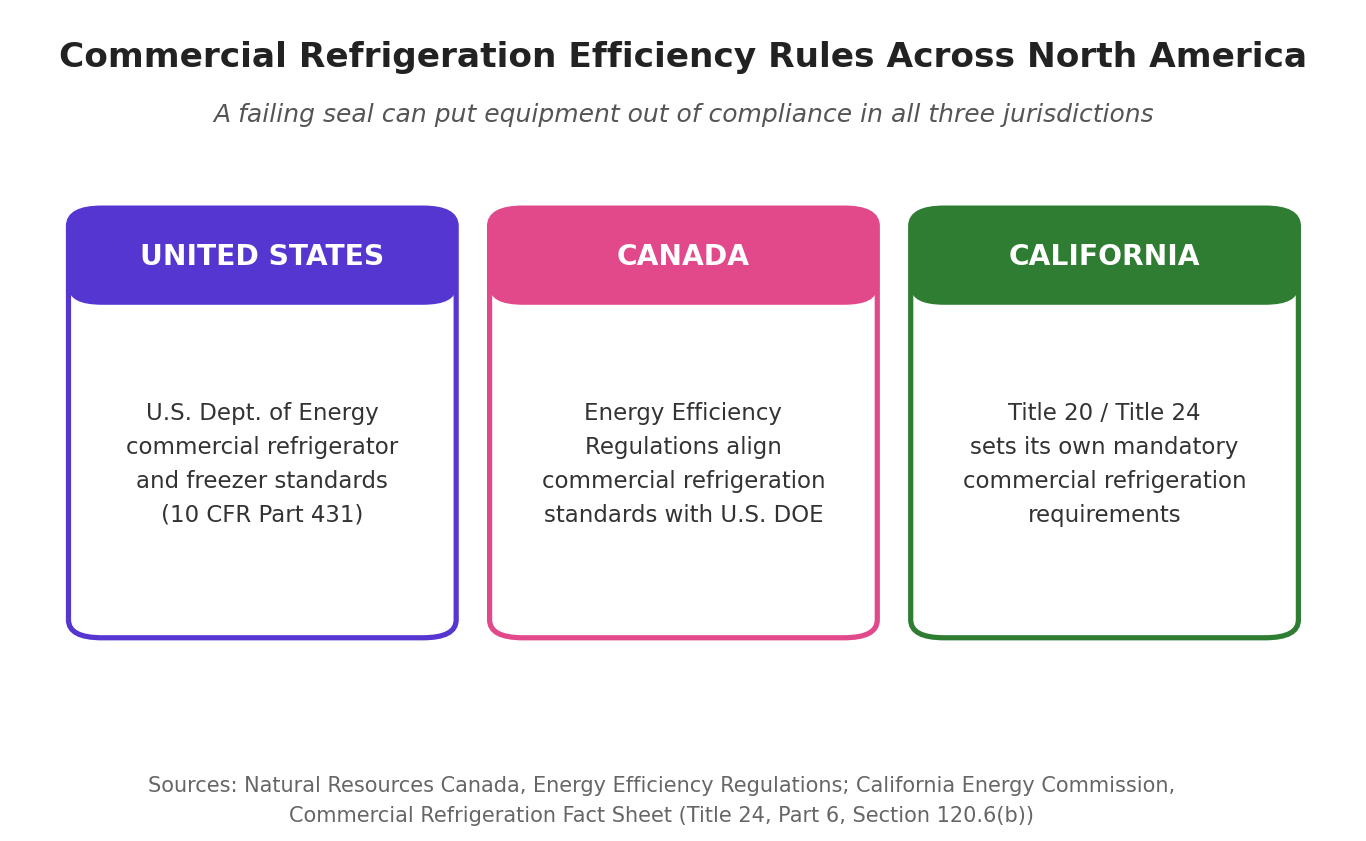
Keeping your seals tight is also a matter of law. Energy efficiency standards for commercial refrigeration are enforced across North America. Canada’s Energy Efficiency Regulations align with U.S. Department of Energy standards for commercial refrigeration equipment, and California enforces its own mandatory commercial refrigeration requirements under Title 20 and Title 24, meaning a single failing seal can put a multi-location operation out of compliance in more than one jurisdiction at once. A flattened, leaking gasket is one of the fastest ways to fail an efficiency audit.
Frequently Asked Questions About Gasket Compression
How much compression should a refrigerator gasket have? ▸
A gasket needs just enough compression to create a complete thermal barrier. The dollar-bill test is your best guide: you want firm, even resistance all the way around. You do not want so much magnetic pull that the door is hard to open, which violates safety rules and wears out hinges. It is about a perfect, uniform fit.
How can I make my refrigerator door seal tighter? ▸
Start by cleaning off any grease or crumbs that block the seal. If you have minor warps, you can use low heat from a hair dryer to soften the vinyl and help it reshape. But if the vinyl has taken a permanent compression set, it is done. No amount of heat will bring back the rebound. You need a replacement.
How do I tell if my refrigerator gasket is bad? ▸
Run the dollar-bill test first. If the bill pulls out with zero drag, the seal is gone. Also look for visible gaps, cracked vinyl, mold in the folds, or sweat forming on the outside of the door frame. These are clear signs your cooler gasket is failing.
How long do commercial refrigerator gaskets normally last? ▸
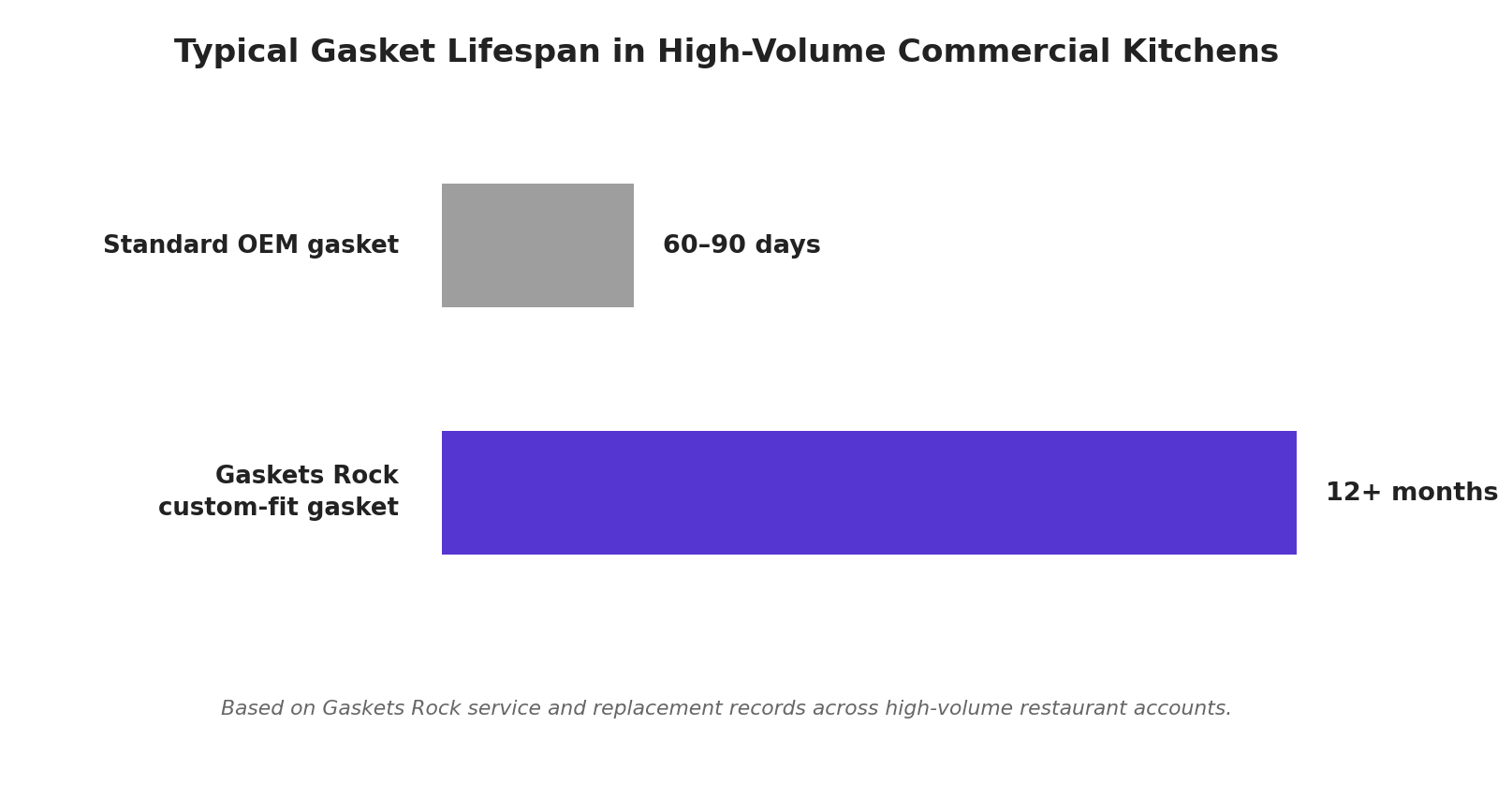
Cheap OEM gaskets in busy kitchens often quit within 60 to 90 days. Our custom-fit, commercial-grade gaskets are built for real working kitchens and easily last over a year. As Craig Ledger, Executive Chef at Jimmy Buffett’s Margaritaville, discovered after dealing with constant gasket failures, our commercial-grade products outlast standard OEM competition by a mile under heavy daily kitchen use.
How does a bad gasket affect energy loss in commercial refrigerators? ▸
A bad seal lets warm air pour in 24 hours a day. Your compressor has to work double-time to keep things cold, spiking your power bills and burning out your motor over time.
Contact Us Today
Gasket compression is the line of defense keeping your kitchen running. A flat, worn gasket quietly burns cash and strains your compressor until the whole system quits. Do not let cheap parts ruin your equipment.
At Gaskets Rock International, we build gaskets that hold their compression under real kitchen conditions. Tired of replacing cheap gaskets every two months? Let our crew handle the job. Call us today at (800) 790-9284 or contact us online to get your free commercial gasket quote. Our team visits from local divisions across the United States, Canada, and México, in addition to our home base at 409 Parkway View Drive in Pittsburgh.