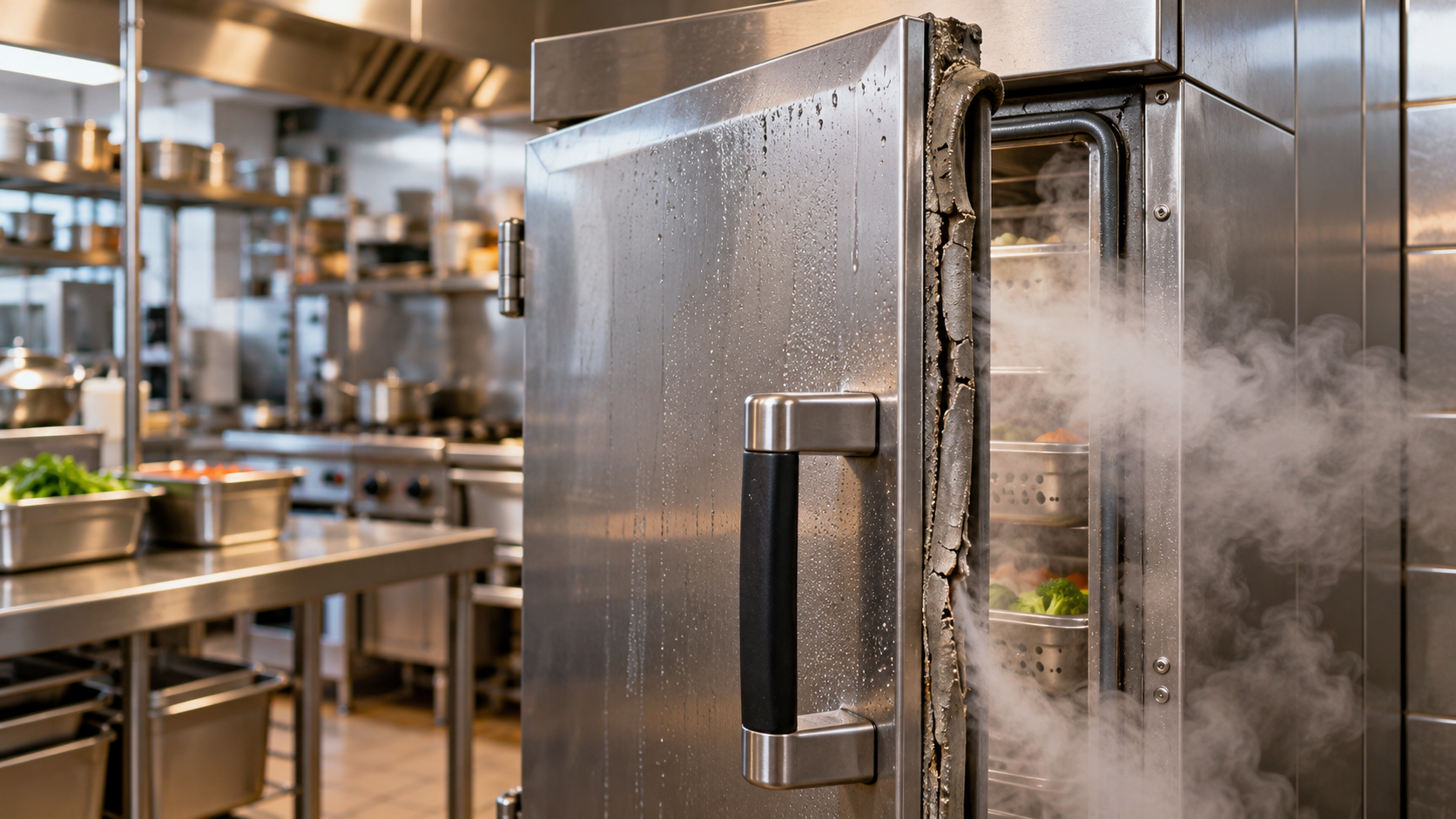
When a commercial steamer runs long cycles, turns out unevenly cooked food, and fills the line with heat and moisture, the heating element usually takes the blame. In many kitchens the real cause is a steamer gasket leak, a worn door seal that lets steam escape the cooking compartment before it can do its job. A compartment steamer depends on trapping steam against the food at a steady temperature. Once the seal fails, the unit behaves like an open pot and burns extra water and energy trying to catch up. The team at Gaskets Rock sees this pattern in high-volume kitchens every week, and the fix is usually a fraction of the cost of a service call or a replacement steamer.
This guide explains what a leaking steamer door seal does to cook times, food quality, utility bills, and staff safety. It also shows how to spot the problem early, how to rule out other causes, and how to keep a replacement gasket sealing for as long as possible.
What a Steamer Gasket Leak Does to Cook Times and Food Quality
A steamer cooks by transferring heat from steam directly to the food. That only works when the compartment holds steam consistently. A gasket that has lost its compression lets steam and heat leak out around the door, and the effects show up on the line long before the seal looks broken.
Slower Cycles and Lost Heat Transfer
With steam escaping, the compartment has to keep producing more to hold temperature. Batches that normally finish in a predictable window start dragging, and cooks compensate by adding minutes or by running the unit continuously. During a rush, a few extra minutes per batch of vegetables, rice, or seafood stacks up into a backed-up ticket rail. ENERGY STAR identifies reduced heat loss as one of the reasons efficient steam cookers deliver shorter cook times and higher production rates, which shows how closely cook speed and heat retention are linked.
Uneven Cooking and Food Safety Exposure
Steam circulating at a uniform temperature cooks food evenly from the top pan to the bottom pan. A leak disrupts that circulation and creates cooler pockets, especially near the door edge. The result is a tray where some portions are overcooked and soft while others stay underdone at the center. Beyond the quality complaints, undercooked product is a food safety problem, and it is difficult to diagnose from the plate alone. That is why many kitchens spend weeks adjusting recipes and timers when the door seal is the actual cause.
The Utility Cost of a Leaking Steamer Door Seal
Steamers are among the heaviest water users in a commercial kitchen, so any loss of efficiency shows up on both the water bill and the energy bill. The manufacturer and government benchmarks below show how wide the gap already is between efficient and standard equipment, and why a door that does not seal works against every efficiency feature built into the unit.
Water and Energy Benchmarks for Commercial Steam Cookers
| Measure | Standard Steam Cooker | ENERGY STAR Certified Steam Cooker |
|---|---|---|
| Average water use | 40 gallons per hour | 3 gallons per hour |
| Water efficiency | Baseline | 90 percent or more improvement |
| Energy efficiency | Baseline | Up to 60 percent more efficient |
| Heat loss and cook speed | Higher heat loss | Reduced heat loss, shorter cook times, higher production rates |
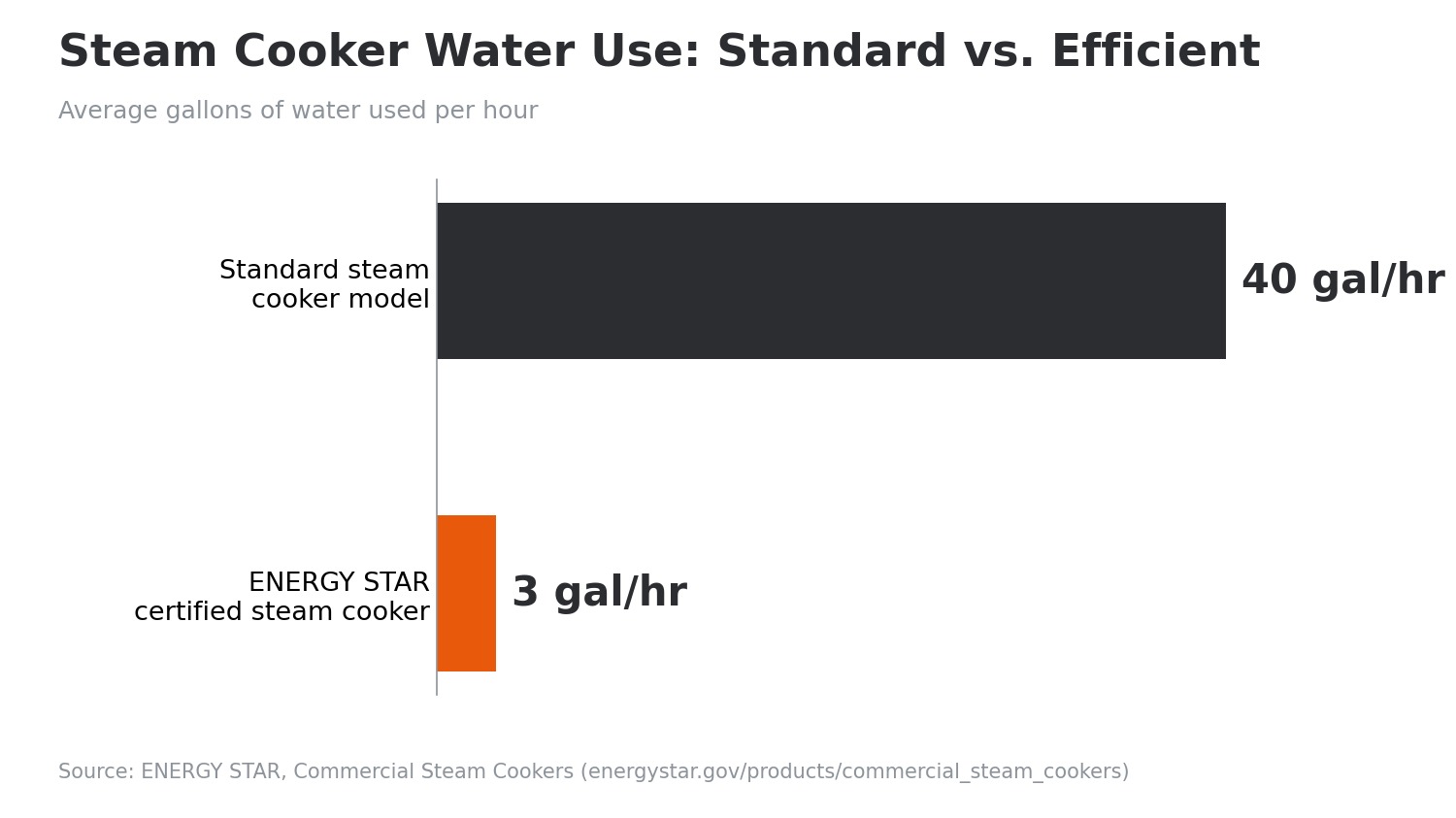
Those figures describe equipment that is sealing properly. ENERGY STAR’s own certification documents for boilerless steamers list the door gasket as a critical component, noting that a change in gasket material or dimensions would affect the rate of heat loss from the unit. In plain terms, the seal is part of the efficiency design. When it wears out, the steamer loses heat through the door and the heating system and water supply work harder to replace it.
Why Hot Water Makes Steam Loss More Expensive
Water and energy costs are linked in a kitchen. Federal guidance on commercial kitchen equipment points out that high-volume kitchen applications typically use mostly hot water, so every wasted gallon also carries the cost of the fuel used to heat it. A steamer that keeps topping off and reheating because of a leaking door adds to both lines of the utility bill at once.

A worn door seal is also one of the least expensive components on the unit to correct. Custom-fit replacement seals for commercial steamers and ovens are built for the specific door size and profile, which restores the compression the original design relied on. Gaskets Rock designs its seals to resist heat, grease, and mold, which are the three conditions that shorten gasket life in a working kitchen.
How to Tell When a Steamer Door Seal Is Failing
Many operators wait until a gasket is split or hanging off the door. By then the unit may have been losing steam for months. A hairline crack, a flattened section, or a stretch that no longer seats flush against the door frame can leak enough steam to change cook times across an entire service.
Early Signs of a Steamer Gasket Leak
| What You Notice | What It Usually Means | What to Check |
|---|---|---|
| Steam visible around the door during a cycle | The gasket is not compressing evenly against the frame | Run a hand near the edges, with caution, and look for the gap along the top, sides, and bottom |
| Water pooling on the floor or running down the front panel | Escaping steam is condensing outside the compartment | Inspect the lower corners and the bottom edge of the seal |
| High-pitched hissing or whistling | Steam is forcing its way through a gap | Listen at each corner to locate the leak |
| Cook times creeping upward | Heat and steam are being lost faster than the unit can replace them | Compare current batch times against your normal times |
| Hard, brittle, or discolored rubber | The material has aged from constant heat exposure | Press the gasket with a fingertip and check whether it springs back |
| Greasy film or dark buildup along the seal | Residue is stopping the gasket from seating tightly | Clean the gasket and frame, then look again for gaps |
The Paper Test, Step by Step
- Turn the steamer off and let it cool completely before touching the door or gasket.
- Close the door on a strip of paper or a dollar bill at several points around the frame.
- Gently pull the paper out. If it slides free with no resistance at any point, the gasket lacks compression there.
- Repeat at the top, bottom, and both sides, since leaks often start at one corner.
Gasket Problem or Something Else?
A gasket is not always the only reason a steamer door leaks. Before ordering a replacement, rule out a few related causes so the new seal performs the way it should.
- A door that has dropped or shifted out of square will compress the gasket unevenly, no matter how new the seal is. Worn door hinges and latches are a common reason a door stops closing tight.
- Food debris, scale, or dried grease in the gasket channel can keep the seal from seating fully.
- A gasket that was installed twisted, stretched, or the wrong profile for the door will leak at the same spot repeatedly.
If the door aligns well and the channel is clean, the seal itself is almost certainly the problem. Photograph the unit, note the model number, and measure the gasket only after it has relaxed, so the replacement is matched correctly the first time.
“We are an EXTREMELY high volume restaurant… our gaskets used to wear out every 2 months! With Gaskets Rock, our commercial refrigeration gaskets last much longer and in many cases over a year! The Gaskets Rock staff do just that, ROCK!” – Craig Ledger, Executive Chef at Jimmy Buffet’s Margaritaville
Safety Risks of Escaping Steam in a Busy Kitchen
Lost efficiency is only part of the problem. A leaking door gasket creates hazards for the people working around the steamer.
Steam Burns Near the Door
Steam is hard to see once it leaves the door seal, and line cooks moving quickly during dinner service can pass a hand or forearm through it without noticing. Steam burns are painful and can cause serious injuries. A leak concentrated at the door handle or latch edge is particularly risky because that is exactly where staff reach to open the unit.
Slick Floors and Slip Hazards
Escaping steam condenses on the front of the unit and drips to the floor. Even a thin film of water on tile, combined with grease, creates a slip hazard in a space where staff carry hot pans and move fast. Standing water near a steamer is also a common item to be flagged during health inspections, which is one more reason to correct a leak promptly.
Hot-line and cold-line seals wear in similar ways, so kitchens that fix the steamer often inspect their cooler and freezer door seals at the same visit. One site assessment can cover the steamers, ovens, walk-ins, and reach-ins together.
Steamer Gasket Maintenance That Prevents Leaks
Most steamer gasket failures are gradual, which means routine habits make a large difference in how long a seal lasts. A simple schedule keeps the work short and catches problems while they are still inexpensive to fix.
A Practical Inspection and Cleaning Routine
| How Often | Task | Why It Matters |
|---|---|---|
| Daily | Wipe the gasket and door frame with mild detergent and warm water once the unit has cooled | Removes grease, food particles, and scale that stop the seal from seating |
| Weekly | Inspect the full gasket for cracks, flat spots, hardness, and gaps, and run the paper test | Catches early wear before cook times and utility use change |
| Monthly | Check door alignment, hinges, and latch tension | Prevents uneven gasket compression |
| At every sign of wear | Replace the gasket instead of waiting for a full failure | Stops ongoing steam, water, and energy loss |
Habits That Shorten Gasket Life
- Using strong solvents or abrasive cleaners, which can make silicone and rubber brittle. Follow the cleaning instructions in your operator manual.
- Slamming the door or forcing the latch, which damages both the gasket and the door alignment.
- Leaving the door ajar between batches, which exposes the seal to repeated heat swings.
- Delaying a replacement because the gasket still looks intact, even though it has lost its flexibility.
Kitchens that want this handled without adding to the workload can use a scheduled gasket maintenance program with labeled equipment and replacement records. Each unit is labeled and documented, so future replacements are simple to order and match.
Replacing a Steamer Door Gasket the Right Way
A replacement only helps if the new seal fits the door and the installation is done correctly. Generic or poorly matched parts are a leading reason steamer seals leak again within months.
Custom-Fit Seals Built for Kitchen Conditions
Gaskets Rock builds custom-fit seals measured to the specific unit, and the company supports a wide list of commercial equipment, so you can see which equipment brands are supported before you call. The seals are designed to hold up against heat cycling, grease, and mold, and to outlast standard factory parts. For a closer look at the difference, read what sets these seals apart from factory replacements.
On-Site Measuring and Installation From Local Partners
Gaskets Rock works through a nationwide network of local managing partners who measure and install on-site. To reach the team covering your kitchen, find a local managing partner near you. Restaurant groups and franchises with several kitchens can arrange consistent gasket service across every location, which keeps equipment records in one place and replacements on the same schedule.
To talk through a specific steamer or schedule an inspection, contact the team by phone at (800) 790-9284 or visit the office at 409 Parkway View Drive. Hours are Monday through Friday, 8:00 AM to 6:00 PM, and the office is closed Saturday and Sunday.
Steamer Gasket Questions Answered
How does a steamer gasket leak affect cooking performance? ▸
A leaking gasket lets steam and heat escape the cooking compartment. The unit then needs more time and more energy to hold temperature, which stretches cook times and can leave food unevenly cooked, with overdone portions next to underdone ones.
How can I tell if my steamer gasket is leaking? ▸
Look for steam around the door during a cycle, water on the floor or front panel, a hissing sound, and cook times that keep getting longer. Hard, cracked, or discolored rubber is another warning sign. A paper test on a cool, empty unit will show where the seal has lost compression.
Does a steamer gasket leak increase water and utility costs? ▸
Steamers already use a lot of water and energy. ENERGY STAR reports that standard steam cookers use about 40 gallons of water per hour, compared with about 3 gallons per hour for certified models. Because the gasket affects heat loss, a failing seal works against efficiency and makes the unit work harder to hold temperature.
How often should steamer door gaskets be inspected? ▸
A practical routine is a quick wipe-down each day after the unit cools and a full visual and paper-test inspection every week. Replace the gasket as soon as you find cracks, hardness, or gaps rather than waiting for it to fail completely.
Can I clean a steamer gasket with harsh chemicals? ▸
It is best to avoid them. Strong solvents can break down silicone and rubber and make the gasket brittle. Mild detergent and warm water, along with the cleaning guidance in your operator manual, are the safer choice.
Is a leaking steamer gasket a safety hazard? ▸
Yes. Escaping steam can burn staff working near the door, and the condensation it creates can leave floors wet and slippery. Standing water near the unit can also draw attention during a health inspection.
What makes Gaskets Rock seals different from standard factory parts? ▸
Gaskets Rock builds custom-fit seals measured to your equipment and designed to resist heat, grease, and mold. They are made to outlast standard factory parts, and local managing partners handle the measuring and installation on-site.
A leaking steamer gasket rarely announces itself with a dramatic failure. It slowly lengthens cook times, raises water and energy use, and exposes staff to steam and wet floors, all while the kitchen looks for a different cause. Replacing a worn seal with a properly fitted one restores the sealed cooking compartment the steamer was built around, and Gaskets Rock is ready to help with the measuring, the replacement, and the records that make the next one easy.