Every time your team opens a walk-in cooler door, cold air can flow out while warmer, more humid air enters. In a busy commercial kitchen, that exchange happens repeatedly throughout the day and adds to the cooling load your refrigeration system has to handle. Properly installed walk-in cooler strip curtains create a flexible barrier across the doorway, helping reduce that air exchange without preventing employees from moving in and out. At Gaskets Rock International, we look at strip curtains as one part of a complete door-sealing strategy that also includes properly fitted gaskets, hinges, sweeps, and door alignment.
Strip curtains cannot eliminate every temperature fluctuation, and they do not replace the insulated walk-in door itself. What they can do is reduce the direct path between the refrigerated space and the warmer surrounding environment while the main door is open. That is particularly useful during deliveries, restocking, prep periods, and other times when employees frequently enter and leave the cooler.
The Physics Behind Walk-In Cooler Air Infiltration
An open walk-in doorway creates an opportunity for air at two very different temperatures and densities to exchange places. Colder air is denser and tends to flow outward near the lower portion of the doorway, while warmer air can enter higher in the opening. Humidity makes the problem more significant because the refrigeration system must remove not only heat but also moisture entering the refrigerated space.
The U.S. Department of Energy recognizes infiltration through walk-in doors as an efficiency concern. Federal walk-in cooler and freezer requirements state that manufacturers of covered walk-ins must incorporate strip doors, spring-hinged doors, or another method of minimizing infiltration when doors are open. This requirement has applied to covered walk-in manufacturers since January 1, 2009, according to the DOE walk-in cooler and freezer energy conservation standards.
That rule is important, but it should not be misinterpreted. It does not mean every restaurant is federally required to retrofit every existing walk-in with strip curtains, nor does it mean local health inspectors automatically cite a restaurant simply because strip curtains are absent. Instead, the federal provision establishes a manufacturing requirement for covered walk-in equipment.
For operators, the practical lesson remains straightforward: reducing infiltration makes it easier for refrigeration equipment to maintain its intended temperature. Our commercial refrigeration strip curtain installation service is designed specifically around that goal.
How Strip Curtains Can Reduce Refrigeration Load
When warm air enters a cooler, the refrigeration system must remove the added heat to return the space and its contents to the desired temperature. Humid air can create an additional latent cooling load because moisture may condense on cold surfaces or contribute to frost in sufficiently cold areas.
Strip curtains reduce the size of the unrestricted opening while allowing employees to pass through. Individual strips move aside as someone enters and then fall back into position. Their usefulness comes from limiting air movement rather than creating an airtight seal.
Reducing infiltration can provide several operational benefits:
- Less warm outside air enters while the main door is open.
- Less refrigerated air can freely spill through the doorway.
- Temperature recovery after periods of heavy door traffic may improve.
- Humidity entering the cooler can be reduced.
- The refrigeration system has less unnecessary heat and moisture to remove.
- Employees retain hands-free access during normal kitchen operations.
The actual energy savings depend heavily on the installation, traffic level, temperature difference, humidity, door dimensions, refrigeration equipment, and how long the door would otherwise remain unobstructed. For that reason, we avoid promising a universal percentage reduction in energy use. The savings for one restaurant cannot automatically be applied to another.
Strip Curtains and Compressor Operation
A compressor responds to the refrigeration load placed on the system. When additional heat repeatedly enters through an open doorway, the refrigeration equipment generally has to operate longer or more frequently to remove that heat.
We do not recommend assuming that every door opening causes immediate “rapid cycling.” Compressor cycling depends on thermostat or controller settings, system design, load, differential settings, and other factors. However, reducing unnecessary infiltration can reduce one source of refrigeration load and help the equipment maintain more stable operating conditions.
Over time, good doorway management can support:
- More consistent cooler temperatures
- Reduced unnecessary refrigeration runtime
- Lower exposure to warm, humid kitchen air
- Less opportunity for condensation and frost associated with infiltration
- Better overall refrigeration efficiency
Strip curtains are therefore most effective when we combine them with proper equipment maintenance rather than treating them as a cure for mechanical refrigeration problems.
Strip Curtains and Door Gaskets Solve Different Problems
One of the most important distinctions we make with commercial refrigeration is the difference between an open-door barrier and a closed-door seal. Strip curtains and refrigeration gaskets serve complementary purposes.
Strip curtains protect the opening when the main door is open. The flexible strips reduce air movement while employees, carts, and inventory pass through the doorway.
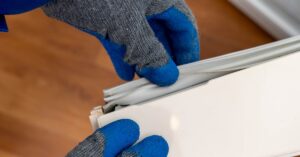
Door gaskets seal the perimeter when the door is closed. A properly fitted gasket compresses against the frame to limit air leakage around the closed door.
If a gasket is torn, brittle, flattened, loose, or improperly fitted, warm and humid air can continue entering even after the door closes. That leakage can contribute to condensation, frost, longer refrigeration runtime, and difficulty maintaining temperatures.
That is why we recommend inspecting the complete door assembly. Our walk-in cooler gasket replacement service addresses the closed-door seal, while strip curtains help control infiltration during open-door traffic.
A new strip curtain will not repair a damaged gasket, and a perfect gasket cannot prevent air exchange while the walk-in door is standing open. For the best results, both components need to perform their intended jobs.
Why a Complete Refrigeration Seal Matters
Commercial refrigeration doors experience significant wear. Employees open them repeatedly, carts can strike the frame, hinges can gradually move out of alignment, and gaskets are exposed to moisture, food debris, grease, cleaning products, and changing temperatures.
A gasket that no longer sits evenly against the frame can leave a continuous pathway for air leakage. Even if the refrigeration system can compensate for that leakage, maintaining temperature may require additional operation.
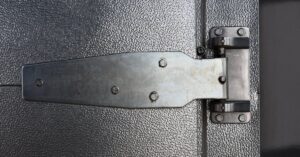
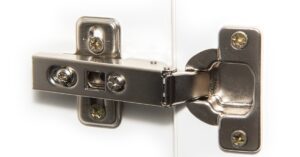
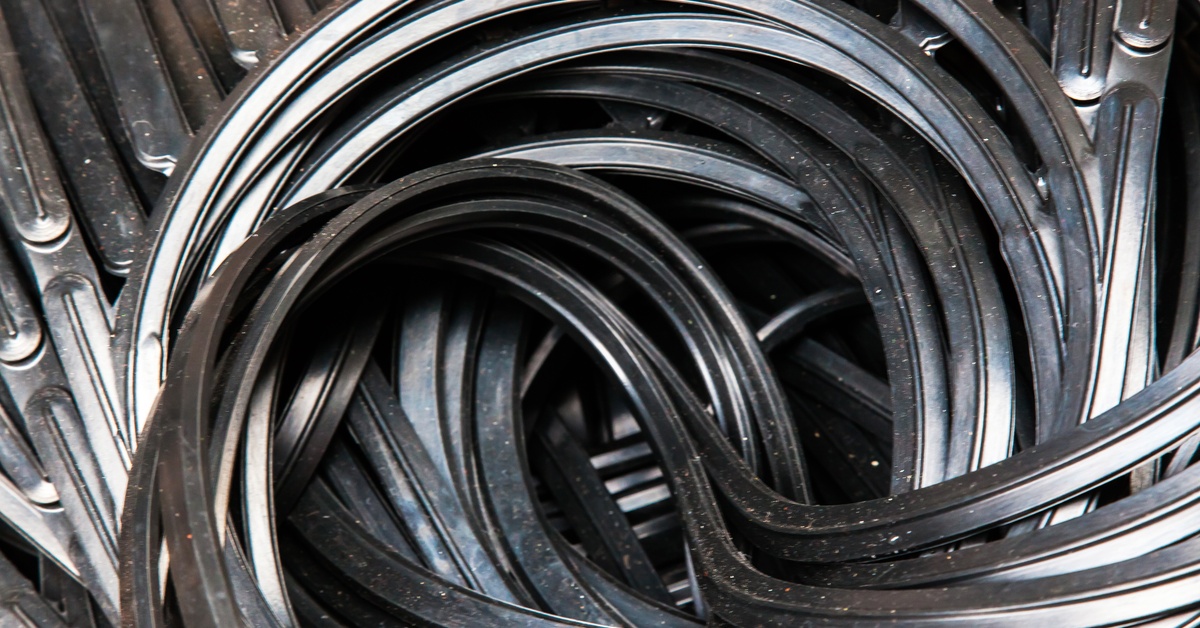
We manufacture and install commercial refrigeration gaskets for a wide variety of commercial refrigeration equipment. We also inspect the surrounding door system because a new gasket cannot correct every problem. A sagging door, damaged hinge, worn sweep, or distorted frame can prevent an otherwise good gasket from sealing properly.
Strip Curtains vs. Air Curtains and Vestibules
Different facilities use different approaches to reducing infiltration. Strip curtains are common because they are mechanically simple, require no electricity during operation, and allow hands-free passage.
| Method | How It Works | Power Required | Best Fit |
|---|---|---|---|
| PVC strip curtains | Overlapping flexible strips separate as employees or carts pass through | None | Existing kitchens with frequent hands-free traffic |
| Air curtains | A fan directs a stream of air across the opening | Electric | Openings where unobstructed sightlines or wide clearance are priorities |
| Vestibules | Two separated doorways prevent direct exposure to the refrigerated space | None | New construction or major remodels with space to spare |
For many existing commercial kitchens, strip curtains provide a practical solution because they can be added without redesigning the entire walk-in entrance.
Proper Strip Curtain Installation Makes a Difference
A strip curtain only works when it adequately covers the doorway. Large spaces between strips or substantial gaps at the bottom reduce the effectiveness of the barrier.
The correct amount of overlap is not universally one or two inches. Manufacturers offer different strip widths, overlap configurations, thicknesses, and materials based on doorway height, traffic, temperature, and whether people, carts, pallet jacks, or other equipment regularly pass through. We recommend following the curtain manufacturer’s specifications rather than relying on one generic overlap measurement.
Good installation practices include:
- Selecting PVC formulated for the operating temperature
- Covering the full width of the doorway
- Extending strips close enough to the floor to minimize open space without creating an unnecessary trip or drag hazard
- Using appropriate overlap for the opening and traffic conditions
- Replacing strips that are torn, excessively scratched, curled, or permanently distorted
- Keeping the strips clean enough to maintain visibility
- Making sure employees do not routinely tie the curtain open
A curtain that stays tied back during every lunch or dinner rush provides little benefit precisely when doorway traffic is highest.
Cleaning and Maintaining Strip Curtains
Strip curtains collect fingerprints, food residue, grease, and other kitchen contaminants. Routine cleaning helps preserve visibility and flexibility.
Use cleaning products that are compatible with the curtain manufacturer’s PVC formulation. Mild soap or detergent and water are generally appropriate for routine cleaning, but aggressive solvents and incompatible chemicals can damage or cloud some plastics.
Inspection should focus on:
- Tears or missing sections
- Permanently curled edges
- Stiff or brittle material
- Significant clouding or scratching
- Missing mounting hardware
- Reduced overlap
- Strips that no longer fall naturally back into place
We recommend evaluating the gasket at the same time. Our guidance on walk-in cooler gasket maintenance covers cleaning, inspection, alignment, door sweeps, and other issues that can affect a closed-door seal.
Climate and Humidity Can Affect Walk-In Performance
The surrounding environment affects how significant doorway infiltration becomes. A walk-in operating next to a hot cooking line in a humid region faces different conditions from one located in a climate-controlled storage area.
In warm, humid environments, opening the door introduces both heat and moisture. Moisture that reaches sufficiently cold surfaces can condense, and under freezing conditions it can form frost or ice. Repeated moisture infiltration can therefore increase the load the refrigeration system must handle.
Dry climates may reduce the moisture component of infiltration, but temperature differences still matter. A walk-in cooler surrounded by very warm air can experience substantial sensible heat gain even when the surrounding environment is relatively dry.
Seasonal conditions matter too. A facility may experience far greater humidity during summer than winter. We recommend inspecting strip curtains, gaskets, hinges, and sweeps as operating conditions change rather than assuming performance will remain identical throughout the year.
Material Durability and Limitations of PVC Strip Curtains
PVC strip curtains are durable, but they are wear items. Constant traffic, carts, cleaning, temperature exposure, and physical impacts gradually affect the material.
A standard PVC formulation is not necessarily appropriate for every freezer or very-low-temperature environment. Low-temperature applications should use curtain material specifically rated for those conditions so it remains flexible enough to function properly.
Visibility also matters. Deep scratches or clouding can make it difficult for employees approaching from opposite sides to see one another. In a busy kitchen, replacing damaged or heavily obscured strips is both a performance and workplace-safety consideration.
Another advantage of a modular strip-curtain system is that a damaged strip can often be replaced individually rather than replacing the entire assembly.
Frequently Asked Questions About Walk-In Cooler Strip Curtains
How do walk-in cooler strip curtains work?
Show answer
They create a flexible secondary barrier across an open doorway. Employees and carts push through individual strips, which then fall back into place and reduce unrestricted air exchange between the cooler and the surrounding room.
Can strip curtains lower refrigeration energy use?
Show answer
They can reduce one source of refrigeration load by limiting warm-air infiltration and cold-air loss while the main door is open. The actual savings vary by facility, doorway traffic, climate, temperature, installation quality, and refrigeration system.
Do strip curtains eliminate the need for a door gasket?
Show answer
No. Strip curtains reduce air movement when the main door is open. The gasket creates the perimeter seal after the door closes. A well-performing walk-in needs both functions addressed.
Why are my strip curtains cloudy?
Show answer
Scratching, grease, soil, age, and exposure to incompatible cleaning chemicals can reduce PVC clarity. Follow the curtain manufacturer’s cleaning recommendations and replace strips that become too damaged or opaque for safe visibility.
When should strip curtains be replaced?
Show answer
Replace individual strips when they become badly torn, stiff, curled, cloudy, or unable to return to their normal overlapping position. There is no universal replacement interval because traffic and operating conditions vary significantly.
Are air curtains better than PVC strip curtains?
Show answer
Not universally. Air curtains offer unobstructed passage but require powered equipment and correct airflow design. PVC strips are mechanically simpler and require no electricity to maintain the barrier. The best option depends on the doorway and operation.
Should strip curtains touch the floor?
Show answer
They should provide effective coverage near the bottom of the doorway while still following the manufacturer’s installation recommendations and maintaining safe passage. Excessive gaps increase air exchange, while strips installed too long can interfere with traffic.
Build a Complete Walk-In Cooler Sealing Strategy
Strip curtains are most useful when they are part of a complete approach to refrigeration efficiency. They limit infiltration while the door is open, but the gasket, hinges, sweep, frame, and refrigeration system still need to perform correctly after the door closes.
At Gaskets Rock, we specialize in solving commercial refrigeration sealing problems. We measure the equipment, identify the appropriate gasket profile, manufacture the replacement, and install it so you do not have to hunt for an uncertain part number or settle for a poor fit.
If your walk-in is showing condensation around the doorway, visible gasket damage, difficult door closure, or unexplained temperature instability, we can inspect the sealing system and determine what needs attention. Contact Gaskets Rock or call us at (800) 790-9284 to request a free commercial gasket quote.