Commercial refrigeration systems rely on precise mechanical components that support safe food storage and steady daily performance. Door hinges carry constant weight and repeated motion, which leads to wear that can affect seal integrity and temperature control. When hinge wear appears, a professional hinge service restores alignment, stability, and confidence in your equipment.
A structured appointment offers clarity about the condition, repair scope, and expected results. Technicians evaluate hardware, door balance, gasket contact, and cabinet frame condition before any repair begins. This careful approach protects inventory, limits downtime, and extends equipment life within intense food service environments.
Clear knowledge of what to expect during a professional hinge service helps owners plan budgets, staff schedules, and product storage with assurance. With this, facility managers can approach a service visit with realistic expectations and informed questions for their technician.
Initial Assessment and Equipment Review
A technician begins each appointment with a full assessment of the refrigeration unit and the surrounding workspace to establish a clear picture of the hinge condition. This review covers door weight, cabinet level, gasket seal contact, and visible wear on hinge plates and mounting points. Accurate observations at this stage create a reliable foundation for repair decisions and prevent overlooked faults that could affect future performance.
The technician also asks about recent door behavior, unusual noise, temperature fluctuation, and prior repair history to gather relevant background information. This discussion helps identify patterns that suggest misalignment, hardware fatigue, or cabinet stress within high-demand food service settings. Detailed notes from this conversation support a focused repair plan that addresses root causes rather than surface symptoms.
Hinge Condition Evaluation
After the initial review, the technician conducts a precise evaluation of each hinge component to determine wear level and structural integrity. This process includes inspection of pivot points, hinge pins, bushings, and fasteners for distortion, corrosion, or excessive movement. Careful measurement confirms whether parts meet manufacturer specifications or require replacement to restore proper door support.
Any sign of metal fatigue, elongated screw holes, or uneven pressure distribution receives close attention before further action proceeds. The technician verifies that hinge brackets sit flush against the cabinet surface without gaps that could affect stability. Clear evaluation results allow the service professional to outline accurate repair steps and realistic timelines for completion.
Hardware and Part Selection
Once the evaluation concludes, the technician selects appropriate replacement parts that match the equipment brand, model, and load requirements. Correct part selection ensures compatibility with existing mounting points, door weight, and cabinet design specifications. Attention to manufacturer standards supports reliable function and protects warranty terms related to hinge assemblies.
High-quality hinges, reinforced brackets, and durable fasteners replace worn components that no longer meet performance expectations. The technician confirms material strength and finish suitability for cold storage environments with frequent door use. Thoughtful part selection reduces premature wear and supports long-term stability within demanding commercial kitchens.
Door Removal and Surface Preparation
Before hinge replacement occurs, the technician secures the door and carefully removes it from the cabinet frame. Proper door removal prevents stress on remaining hardware and protects surrounding surfaces from accidental damage. Controlled handling preserves gasket shape and prevents distortion that could affect future seal performance.
With the door set aside, mounting surfaces receive close inspection and preparation for new hinge placement. The technician clears debris, corrects minor surface irregularities, and confirms that screw holes maintain structural integrity. Clean and stable surfaces promote accurate alignment and secure attachment of replacement hardware.
Frame Alignment and Structural Check
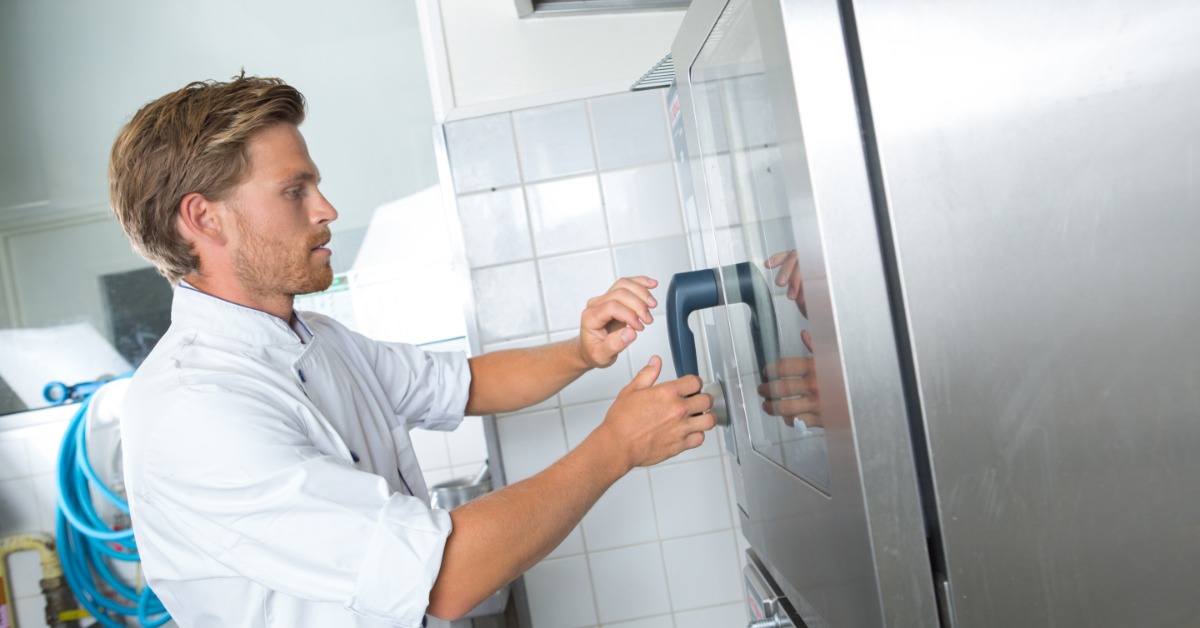
Accurate frame alignment supports balanced door movement and consistent gasket contact across the cabinet opening. The technician evaluates the cabinet level and structural condition before final hinge placement occurs. Any uneven surface or structural shift receives correction to prevent uneven load distribution on new hinges.
Measurements confirm that hinge mounting points align with door geometry and manufacturer specifications. This verification reduces strain on pivot components and limits future wear related to misalignment. Proper frame condition sets the stage for dependable hinge performance under daily operational demands.
Precision Hinge Installation
With preparation complete, the technician installs new hinges according to the manufacturer’s torque specifications and alignment standards. Secure fastener placement ensures stable attachment between hinge plates and cabinet frame surfaces. Careful installation supports smooth pivot motion and balanced door support across repeated use cycles.
Professionals in commercial refrigerator door hinge replacements will ensure your equipment remains reliable and efficient after precise calibration and secure hardware fit across door assemblies. Accurate torque application and correct bracket placement protect the cabinet structure from stress or distortion. This disciplined approach supports consistent door motion and dependable temperature retention.
Seal Contact and Temperature Control Review

After hinge installation, the technician evaluates gasket contact along the full perimeter of the door frame. Uniform pressure between the gasket and the cabinet surface preserves internal temperature and reduces energy waste. Any gap or uneven seal receives prompt correction through minor alignment adjustment.
Temperature readings within the cabinet confirm that proper seal contact supports stable internal conditions. The technician observes door closure behavior to verify balanced motion and complete latch engagement. Reliable seal performance protects stored products and supports food safety standards within commercial environments.
Safety Measures and Work Area Protection
Throughout the service visit, the technician maintains strict safety practices to protect staff, inventory, and surrounding equipment. Protective covers shield nearby surfaces from tool contact or accidental impact. Organized tool placement reduces trip hazards and supports an orderly workspace during repair tasks.
Attention to safety also includes careful handling of heavy doors and secure stabilization before hardware removal. Clear communication with on-site staff prevents unexpected door use while repair proceeds. These measures preserve workplace safety and reinforce professional service standards.
Performance Verification and Final Adjustments
One of the main steps during a professional hinge service is that the technician conducts a comprehensive performance review of the door assembly. Smooth pivot action, balanced closure, and secure latch contact confirm successful hinge replacement. Any minor resistance or uneven motion receives prompt adjustment to achieve optimal operation.
Repeated open and close cycles test durability under conditions that reflect daily kitchen activity. The technician listens for unusual noise and observes the cabinet’s response to door movement. Verified performance results provide confidence that the repair meets operational expectations.
Documentation, Warranty, and Maintenance Advice
At service completion, the technician provides clear documentation that outlines parts replaced, adjustments made, and inspection findings. Accurate records support warranty protection and assist with future service planning. Detailed documentation also offers transparency regarding labor scope and material selection.
The technician concludes with practical maintenance advice that supports long term hinge reliability and door balance. Recommendations may include periodic inspection, proper door use habits, and prompt attention to unusual movement. Proactive care extends equipment life and protects investment in commercial refrigeration assets.
A professional hinge service involves far more than simple part replacement. Each stage, from assessment through verification, reflects careful attention to structural detail, safety, and equipment performance. Skilled technicians apply technical knowledge, precise measurement, and disciplined installation practices to restore dependable door function.
When owners understand what to expect, they can approach a hinge service appointment with clarity and confidence. Structured evaluation, accurate part selection, expert installation, and thorough performance review work together to protect refrigeration reliability. With professional care, commercial refrigerator doors regain balanced motion, secure seal contact, and consistent temperature control that supports daily food service demands.